


Who should attend
Engineers
Software, platform, and solutions engineers
Take an agent from notebook to production, and know what breaks once real traffic hits it.
Data scientists and ML engineers
Data scientists, ML engineers, analytics leads
You already build models. Learn the layer around them: retrieval, orchestration, and evals for outputs with no single right answer.
Product leaders and consultants
Product managers, founders, integrators
Learn what agents can safely automate and how to scope the work, without writing the inference code.
From LLM foundations to governed AI agents
Prompt engineering shapes what an agent tries. Context engineering shapes what it knows. Harness engineering shapes what it can and cannot do. This curriculum teaches all three, in that order.
Each module adds one layer to the same agent
12 modules · 40 hours
Foundations
The agentic AI ecosystem
What separates an agent from a chatbot: the agentic loop (observe, reason, act, repeat), the shift from classic LLMs to reasoning models, and the idea that an agent is a model plus a harness. A map of today's landscape, from single agents to multi-agent systems, agentic coding tools, and browser and computer-use agents, with what each piece costs you in latency, tokens, and risk.
Lecture · Discussion · Practical exercise
Transformers, attention, and reasoning models
How language models actually work, from tokens and embeddings to self-attention and next-token prediction, and what changes when a model reasons before it answers. Enough depth to explain why agents hallucinate, why context windows matter, and when a reasoning model is worth its cost.
Lecture · Discussion · Practical exercise
Context and retrieval
Vector databases and agentic RAG
Similarity search, chunking, hybrid search, and reranking, then the step from naive RAG to agentic RAG, where the agent decides what to retrieve, when, and whether the results are good enough. You'll build a retrieval pipeline that holds up on messy, real-world documents.
Lecture · Discussion · Practical exercise
Context engineering and agent memory
Deciding what the model sees on every turn: context windows, summarization, short-term and long-term memory, knowledge graphs, and the failure modes of overloaded context. You'll design a context pipeline that stays fast and accurate under real traffic.
Lecture · Discussion · Practical exercise
Agent mechanics
Tool use and function calling with LangChain
Turning a model into something that acts: tool definitions, function calling, structured outputs, and handling tool errors. You'll build your first tool-using agent in LangChain and connect it to APIs, data, and the web.
Lecture · Discussion · Practical exercise
Stateful agents and orchestration with LangGraph
Graphs instead of chains: state, branching, loops, checkpoints, and pause-and-resume. You'll orchestrate a long-running agent in LangGraph that survives failures and can wait for a human before it acts.
Lecture · Discussion · Practical exercise
Agentic design patterns
The patterns behind agents that work: ReAct, reflection, planning, routers, and multi-agent architectures, including supervisor, hierarchical, sequential, and parallel designs. Ends with deep agents, which plan, delegate to sub-agents, and work through multi-step tasks over long horizons.
Lecture · Discussion · Practical exercise
Interoperability
MCP, A2A, and agent skills
How agents connect to tools, data, and each other. Build and consume Model Context Protocol (MCP) servers, coordinate agents across systems with Agent2Agent (A2A), and package reusable expertise as agent skills. Covers how agentic coding tools use AGENTS.md and CLAUDE.md files, skills, and MCP to work safely inside a codebase.
Lecture · Discussion · Practical exercise
Harness engineering
Agent evaluation
Measuring an agent before you ship it: building eval sets, LLM-as-judge, trajectory and tool-call evaluation, and regression testing for prompts and models. You'll add an eval suite to your agent that catches failures before users do.
Lecture · Discussion · Practical exercise
Harness engineering: guardrails, human-in-the-loop, and observability
Everything around the model that makes an agent reliable: guardrails, permissions, verification gates, human-in-the-loop approvals, tracing, and feedback loops that turn every failure into a permanent fix. You'll instrument your agent so you can see, explain, and correct what it does in production.
Lecture · Discussion · Practical exercise
Production
Governed agents in production: architecture, security, and when to fine-tune
Reference architectures for agentic applications, plus the security and governance an autonomous system needs: sandboxing, access control, audit trails, prompt-injection defenses, and cost control. Closes with a decision framework for prompting vs. RAG vs. fine-tuning, and a live demo that fine-tunes a small language model as a tool-calling router from agent traces, compared with the large model on cost, latency, and accuracy.
Lecture · Discussion · Practical exercise
Capstone: build and deploy a governed multi-agent system
Bring every layer together: memory and agentic RAG, MCP tools and skills, orchestration, evals, guardrails, and a human-in-the-loop checkpoint. Build-and-deploy track: ship the system to your own URL. Architect-and-scope track: deliver an architecture, a cost model, and a working prototype from templates.
Guided lab · Independent project
What you take home
A governed multi-agent application you build and keep
You start from a boilerplate repository that does nothing but call a model, and add one layer at a time until it is a governed multi-agent system: memory and retrieval, tools and MCP, reasoning patterns and orchestration, then the evals and guardrails that make it safe to run. It ends up in your own GitHub account, deployed to a dedicated cloud URL you can send to anyone. A year of sandbox access, LLM tokens, and GPU clusters comes with it, so it keeps running after the program ends.
- Memory and agentic RAG
- Tools and MCP
- ReAct, reflection, and planning
- Multi-agent orchestration and deep agents
- Evals
- Guardrails and human-in-the-loop
On the Architect and scope track, you take home an architecture, a cost and risk model, and a working prototype instead.
Included in both formats
- 1 year
- Learner and coding sandbox access
- GPU
- Clusters and LLM tokens for every exercise
- Datasets
- Industry-spanning document collections
- Certificate
- Verified certificate of completion
Companion course clips for every module, so you can review anything you missed. Intensive cohorts in Seattle also include catered lunch and on-site lab support.
Learn from the people building this stack
Guest speakers
These are the guest speakers who have spoken at past cohorts. Who joins any given cohort depends on their availability.
 Jerry LiuCo-founderLlamaIndex
 Zain HasanStaff AI/ML Engineer, DXTogether AI
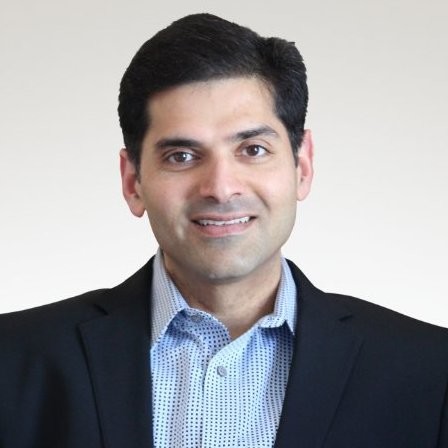 Rehan JalilPresident & CEOSecuriti
 Sophie DalyStaff Data Scientist at StripeStripe
 Leonid YankulinDeveloper AdvocateGoogle
 Adam CowleyStaff Developer AdvocateNeo4j
 Sebastian WitalecHead of DevRelWeaviate
 John GilhulyDeveloper AdvocateArize AI
 Hamza FarooqFounderTraversaal.ai
 Sage ElliottAI Engineer at UnionUnion
 Suman DebnathDirector of Developer Relations EngineeringCrusoe
 Dan NdombeStaff Developer Success AdvocateDocker
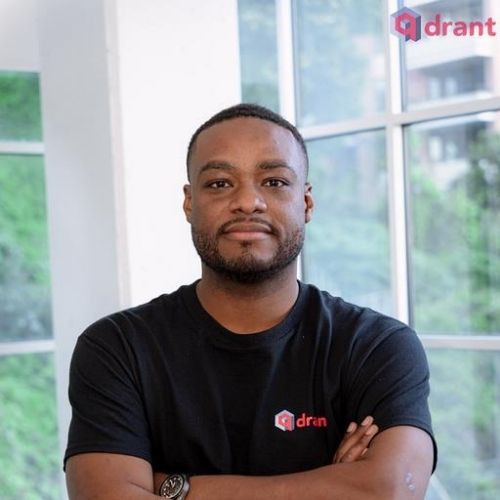 Thierry DamibaDeveloper RelationsQdrant
 Shub ArghaSoftware EngineerArcade.dev
One program, two ways to take it
Same curriculum, same instructors, same capstone. Pick the schedule that fits your life.
- Intensive
5 days
Mon–Fri, 9 AM–5 PM PT
Best for People who can block a week, and teams sent together
- Where
- In person in Seattle, or live online
- Hours
- 40 live hours
- Next cohort
- December 7–11, 2026
- Part-time
10 weeks
Tuesdays, 9 AM–12 PM PT
Best for People learning alongside a full-time job
- Where
- Live online
- Hours
- 30 live hours+ about 10 hours of guided labs and capstone sprints
- Next cohort
- January 5 – March 9, 2027
Identical in both formats
- 12-module curriculum
- Capstone and both tracks
- 1-year learner and coding sandbox
- LLM tokens and GPU clusters
- Industry datasets
- Verified certificate
You can switch formats once at no charge.
Day by day
Each day is 8 hours of live modules and capstone sprints.
Dates shown for the Fall 2026 cohort, December 7–11, 2026.
- MondayDec 78 hours
Foundations and retrieval
Module 01: The agentic AI ecosystem2h
What separates an agent from a chatbot: the agentic loop (observe, reason, act, repeat), the shift from classic LLMs to reasoning models, and the idea that an agent is a model plus a harness. A map of today's landscape, from single agents to multi-agent systems, agentic coding tools, and browser and computer-use agents, with what each piece costs you in latency, tokens, and risk.
Module 02: Transformers, attention, and reasoning models2h
How language models actually work, from tokens and embeddings to self-attention and next-token prediction, and what changes when a model reasons before it answers. Enough depth to explain why agents hallucinate, why context windows matter, and when a reasoning model is worth its cost.
Module 03: Vector databases and agentic RAG4h
Similarity search, chunking, hybrid search, and reranking, then the step from naive RAG to agentic RAG, where the agent decides what to retrieve, when, and whether the results are good enough. You'll build a retrieval pipeline that holds up on messy, real-world documents.
- TuesdayDec 88 hours
Context engineering and tool use
Module 04: Context engineering and agent memory3h
Deciding what the model sees on every turn: context windows, summarization, short-term and long-term memory, knowledge graphs, and the failure modes of overloaded context. You'll design a context pipeline that stays fast and accurate under real traffic.
Module 05: Tool use and function calling with LangChain3h
Turning a model into something that acts: tool definitions, function calling, structured outputs, and handling tool errors. You'll build your first tool-using agent in LangChain and connect it to APIs, data, and the web.
- Capstone sprints A and B
Memory and agentic RAG, then tools2h
- WednesdayDec 98 hours
Orchestration and design patterns
Module 06: Stateful agents and orchestration with LangGraph4h
Graphs instead of chains: state, branching, loops, checkpoints, and pause-and-resume. You'll orchestrate a long-running agent in LangGraph that survives failures and can wait for a human before it acts.
Module 07: Agentic design patterns4h
The patterns behind agents that work: ReAct, reflection, planning, routers, and multi-agent architectures, including supervisor, hierarchical, sequential, and parallel designs. Ends with deep agents, which plan, delegate to sub-agents, and work through multi-step tasks over long horizons.
- Capstone sprint C
Design patterns and multi-agent orchestration
The last hour of module 07
- ThursdayDec 108 hours
Interoperability and evals
Module 08: MCP, A2A, and agent skills4h
How agents connect to tools, data, and each other. Build and consume Model Context Protocol (MCP) servers, coordinate agents across systems with Agent2Agent (A2A), and package reusable expertise as agent skills. Covers how agentic coding tools use AGENTS.md and CLAUDE.md files, skills, and MCP to work safely inside a codebase.
Measuring an agent before you ship it: building eval sets, LLM-as-judge, trajectory and tool-call evaluation, and regression testing for prompts and models. You'll add an eval suite to your agent that catches failures before users do.
- Capstone sprint D
Eval suite1h
- FridayDec 118 hours
Harness engineering and production
Module 10: Harness engineering: guardrails, human-in-the-loop, and observability3h
Everything around the model that makes an agent reliable: guardrails, permissions, verification gates, human-in-the-loop approvals, tracing, and feedback loops that turn every failure into a permanent fix. You'll instrument your agent so you can see, explain, and correct what it does in production.
Module 11: Governed agents in production: architecture, security, and when to fine-tune2h
Reference architectures for agentic applications, plus the security and governance an autonomous system needs: sandboxing, access control, audit trails, prompt-injection defenses, and cost control. Closes with a decision framework for prompting vs. RAG vs. fine-tuning, and a live demo that fine-tunes a small language model as a tool-calling router from agent traces, compared with the large model on cost, latency, and accuracy.
- Capstone sprints E and final
Guardrails and human-in-the-loop, then deployment and demos3h
The self-paced fine-tuning lab is available after the program, using your year of sandbox and GPU access.
Week by week
Every Tuesday is a 3-hour live session. Between sessions you spend about an hour on a guided lab or a capstone sprint.
Dates shown for the Winter 2027 cohort, January 5 – March 9, 2027.
- Week 1Jan 5
Live session · 3 hours
Module 01: The agentic AI ecosystem
What separates an agent from a chatbot: the agentic loop (observe, reason, act, repeat), the shift from classic LLMs to reasoning models, and the idea that an agent is a model plus a harness. A map of today's landscape, from single agents to multi-agent systems, agentic coding tools, and browser and computer-use agents, with what each piece costs you in latency, tokens, and risk.
Module 02: Transformers, attention, and reasoning models
How language models actually work, from tokens and embeddings to self-attention and next-token prediction, and what changes when a model reasons before it answers. Enough depth to explain why agents hallucinate, why context windows matter, and when a reasoning model is worth its cost.
Before next week · about 1 hour
- Lab
Environment setup and embeddings lab
- Week 2Jan 12
Live session · 3 hours
Module 03: Vector databases and agentic RAG
Similarity search, chunking, hybrid search, and reranking, then the step from naive RAG to agentic RAG, where the agent decides what to retrieve, when, and whether the results are good enough. You'll build a retrieval pipeline that holds up on messy, real-world documents.
Before next week · about 1 hour
- Lab
Retrieval lab
- Week 3Jan 19
Live session · 3 hours
Module 04: Context engineering and agent memory
Deciding what the model sees on every turn: context windows, summarization, short-term and long-term memory, knowledge graphs, and the failure modes of overloaded context. You'll design a context pipeline that stays fast and accurate under real traffic.
Before next week · about 1 hour
- Capstone sprint A
Memory and agentic RAG
- Week 4Jan 26
Live session · 3 hours
Module 05: Tool use and function calling with LangChain
Turning a model into something that acts: tool definitions, function calling, structured outputs, and handling tool errors. You'll build your first tool-using agent in LangChain and connect it to APIs, data, and the web.
Before next week · about 1 hour
- Capstone sprint B
Tools
- Week 5Feb 2
Live session · 3 hours
Module 06: Stateful agents and orchestration with LangGraph
Graphs instead of chains: state, branching, loops, checkpoints, and pause-and-resume. You'll orchestrate a long-running agent in LangGraph that survives failures and can wait for a human before it acts.
Before next week · about 1 hour
- Lab
Orchestration lab
- Week 6Feb 9
Live session · 3 hours
Module 07: Agentic design patterns
The patterns behind agents that work: ReAct, reflection, planning, routers, and multi-agent architectures, including supervisor, hierarchical, sequential, and parallel designs. Ends with deep agents, which plan, delegate to sub-agents, and work through multi-step tasks over long horizons.
Before next week · about 1 hour
- Capstone sprint C
Design patterns and multi-agent orchestration
- Week 7Feb 16
Live session · 3 hours
Module 08: MCP, A2A, and agent skills
How agents connect to tools, data, and each other. Build and consume Model Context Protocol (MCP) servers, coordinate agents across systems with Agent2Agent (A2A), and package reusable expertise as agent skills. Covers how agentic coding tools use AGENTS.md and CLAUDE.md files, skills, and MCP to work safely inside a codebase.
Before next week · about 1 hour
- Lab
MCP server lab
- Week 8Feb 23
Live session · 3 hours
Measuring an agent before you ship it: building eval sets, LLM-as-judge, trajectory and tool-call evaluation, and regression testing for prompts and models. You'll add an eval suite to your agent that catches failures before users do.
Before next week · about 1 hour
- Capstone sprint D
Eval suite
- Week 9Mar 2
Live session · 3 hours
Module 10: Harness engineering: guardrails, human-in-the-loop, and observability
Everything around the model that makes an agent reliable: guardrails, permissions, verification gates, human-in-the-loop approvals, tracing, and feedback loops that turn every failure into a permanent fix. You'll instrument your agent so you can see, explain, and correct what it does in production.
Before next week · about 1 hour
- Capstone sprint E
Guardrails and human-in-the-loop
- Capstone
Deploy your capstone
- Week 10Mar 9
Live session · 3 hours
Module 11: Governed agents in production: architecture, security, and when to fine-tune
Reference architectures for agentic applications, plus the security and governance an autonomous system needs: sandboxing, access control, audit trails, prompt-injection defenses, and cost control. Closes with a decision framework for prompting vs. RAG vs. fine-tuning, and a live demo that fine-tunes a small language model as a tool-calling router from agent traces, compared with the large model on cost, latency, and accuracy.
- Capstone
Capstone demos
The self-paced fine-tuning lab is available after the program, using your year of sandbox and GPU access.
Register early and save
Full refund up to five business days before your cohort starts, or transfer to a later cohort, in either format, at no charge.
No cohorts in this format yet.
Tuition benefits accepted — you may be eligible to attend free.
Not sure which format fits? Talk to an advisor.
IntensiveFall 2026
Draft pricing- Where
- Seattle, WA (Redmond)
- Schedule
- Mon–Fri, 9 AM–5 PM PT
- Includes
- Catered lunch, on-site labs, face time with instructors
$3,999$4,999Save $1,000
20% off ends Nov 16 · 7 days left
Then $4,499 (10% off) from Nov 17
- 40 hours of instruction and hands-on labs
- Live sessions with practitioners and guest speakers
- 1-year sandbox, LLM tokens, and GPU clusters
- Companion course clips for every module
- Verified certificate of completion
4.95 from 660+ verified reviews
The most thrilling revelation for me was the multi-step problem-solving approach that mirrors human thinking, offering limitless applications with creative usage of LLMs. I now feel empowered to tackle complex challenges at work with the knowledge gained from this enriching experience.
 Aishwarya Raman — read the full review (opens in a new tab)Senior Software Engineer, Microsoft Azure
The Large Language Models bootcamp has been a game-changer for me. I returned to delve deeper into machine learning and AI, and the immersive week-long format provides a unique learning experience. I've witnessed firsthand the transformative power of applying these techniques in our production environment.
 David Martins Gonçalves — read the full review (opens in a new tab)CTO, Notify Brand Technology
The Data Science Dojo LLM Bootcamp is a hands-on experience, delving into LLMs and their real-world applications. Expert instructors provide a comprehensive framework with a practical focus, enabling you to fine-tune, evaluate, deploy, and monitor LLM applications.
Bernard Tumanjong — read the full review (opens in a new tab)Chief Operations Analysis, US Space Force In my 25-year IT career, this has been one of the most enjoyable learning experiences.
 Victor Green — read the full review (opens in a new tab)LLM bootcamp alum
The hands-on nature of the bootcamp ensured that knowledge learned was knowledge retained.
 Amity Fox — read the full review (opens in a new tab)LLM bootcamp alum
Frequently asked questions
Which format is right for me?
Is the curriculum the same in both formats?
Was this the LLM bootcamp?
What will I be able to build after this agentic AI course?
Do you cover MCP, A2A, context engineering, and harness engineering?
Does the bootcamp cover fine-tuning?
Can I switch formats after I register?
How much does the Agentic AI bootcamp cost?
Why pay for a bootcamp when there are free agentic AI courses?
Who is it for? I'm from a non-technical background.
Are there any prerequisites? I don't know Python.
What's included?
Are the online sessions live? What if I miss one?
Where is the in-person Intensive held?
What is the refund policy?
Will I receive a certificate?
Looking to upskill your team?
Run a private agentic AI cohort for your team, as a five-day intensive or a ten-week part-time program. Engineers build on the Build and deploy track while product and business leaders scope on the Architect and scope track, so the whole team leaves with a shared plan. Volume pricing for teams of five or more.